
Before You Break
How group breaking actually works — and what to watch out for.

Show up on release day for a high-demand product and you already know how it goes. Online inventory is gone in minutes. Your local shop just ran out of their last box. But your Twitter feed is showing you highlight after highlight of breakers ripping cases and pulling the biggest hits.
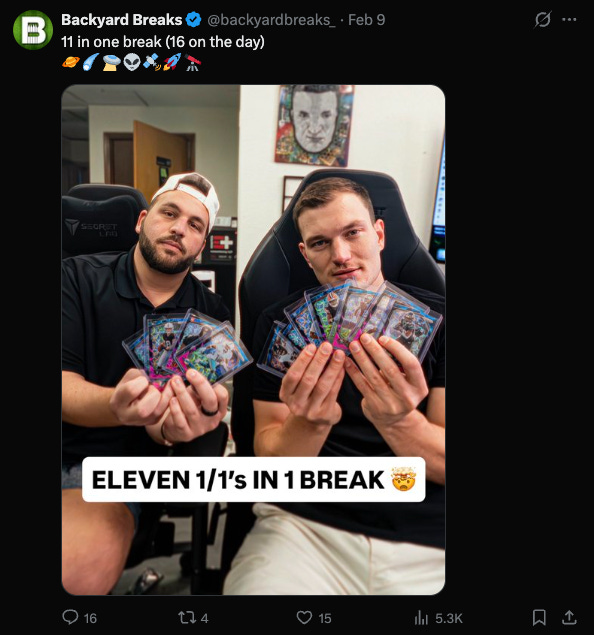
That’s not coincidence. That’s the business model.
Leaked Fanatics documents from earlier this year showed what a lot of collectors already suspected. The biggest customers in the Topps/Fanatics ecosystem, by a wide margin, are group breakers. The docs don't spell out allocation percentages, but the spend numbers make the inference hard to avoid. When a handful of accounts are moving tens of millions of dollars of product annually, they're not getting the same treatment as the rest of us.
Group breaking has been part of this hobby for years. At this point, it’s one of the primary channels through which sealed product moves. That makes it worth understanding — not because we think you should rush out and buy a spot, but because if you’re wondering where the wax went, this is a big part of the answer.
We’ve bought into breaks. We’re not going to pretend otherwise. But we also think the current setup deserves more scrutiny than it gets. So here’s how it works, what it costs, and what to watch out for.
The Basic Idea
A group break is an event, often live-streamed, where collectors buy “spots” to share the cost of opening sealed wax. Spots are organized by team, player, or division. The breaker rips everything, pulls your cards, and ships them out.
The pitch is simple: lower buy-in, a shot at hits you couldn’t afford to chase on your own.
The reality is a little more complicated.
The Formats 📋
Not all breaks work the same way. The format determines how spots are priced, how cards are distributed, and how much risk you're actually taking on. That last part matters more than most people realize going in.
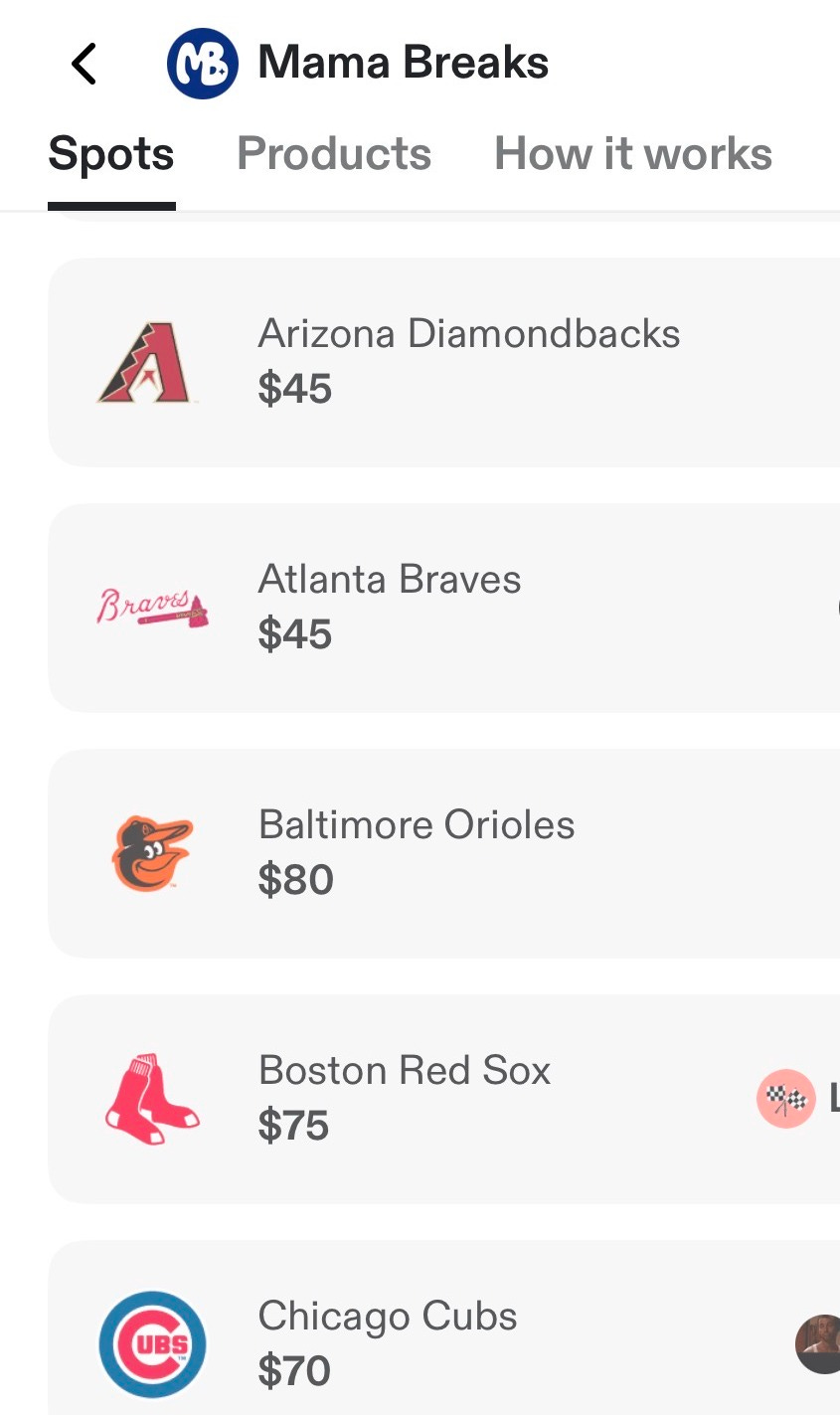
Pick Your Team (PYT) is the most common. You buy all the cards from one team out of the break. Pricing is tiered by hit potential. The Pirates cost more than the Rockies in a 2024 Topps Update case break because of Paul Skenes. Simple.
Pick Your Player (PYP) works the same way, but you’re buying one player’s cards instead of one team’s. Buy-ins are typically lower, unless you go for one of the most sought after players. But the risk is higher. More on that in a minute.
Pick Your Division means you’re buying an entire division’s worth of cards. These breaks only split six to eight ways, which makes them more expensive.
Random Team and Random Division both work the same way. Everyone pays the same flat price and spots are assigned at random. No tiers. Pure luck.
Random Team Draft is a hybrid. Same flat price for everyone, but instead of full randomization, a draft order is randomized and collectors pick their team in turn. You still pay the same as everyone else. You just get a choice.
Serial Number Break is more common in high-end products loaded with numbered cards. Spots are sold for digits 0 through 9. The card goes to whoever holds the last digit of the left-side serial number. A card numbered 26/50 goes to the #6 spot.
Hit Draft / Snake Draft flips the script entirely. The breaker opens everything first, lays out all the hits, and then collectors draft in a randomized order. You’re picking a specific card, not a team.
New formats pop up constantly. Breakers are creative when there's margin on the line. But the core dynamic never changes.
The breaker controls the wax, and you’re buying a piece of the outcome.
The Nitty-Gritty
If you're thinking about buying into a break, these are the things worth knowing before you commit.
Know the actual cost of the wax. If division spots in a Topps Chrome Baseball case break are running $500 and a single hobby box costs $300, buying the box yourself and keeping every guaranteed hit is almost certainly the better play. The break only makes sense if the math does.
Breakers are running a business. Spot prices aren't set as a favor. They're set for margin. If The Hobby Wire hosted a random team basketball hobby box break and spent $1,000 on wax, we could charge $50 per spot, sell all 30 teams, and walk away with $500. That math gets even better for breakers who receive product at MSRP and price spots based on secondary market value. This isn't a knock on the model. It's just the reality.
Price is negotiable more often than people think. On live platforms like Whatnot or Fanatics Live, breakers can adjust pricing in real time. Ask for a few dollars off the team you want. Ask for a discount if you're buying multiple spots. Many will say yes. The longer a break sits unfilled, the more it's costing them.
The break doesn't start until every spot sells. Buy the Mavericks on Monday and you might be waiting until Thursday because no one wants the Kings. After a while, breakers will usually bundle the slow spots to get things moving. Recently, there’s been a new trend where instead of setting the price, spots are auctioned off to ensure the break starts in a timely manner. Either way, patience is part of the deal.
There are no guarantees. Buying into a break doesn’t mean you’ll get something. This is especially true for Pick Your Player formats. Buying a player's cards out of a product that may contain very few of them to begin with is a real risk. If the breaker doesn't pull a single card of your player, you walk away with nothing. Read the fine print. Some breakers won't ship paper base cards at all — no hit, no shipment. Some have the nerve to sell the base cards as their own separate spot. Neither of those terms is unusual. Neither gets announced upfront.
The One Rule That Isn’t Optional 🚨
If there’s one thing to take away from this, it’s this.
Only buy into a break where you can see everything.
Every pack. Every card. Every randomization — in real time, on camera. Group breaks have been manipulated. It’s not hypothetical. It’s happened, and it’s easier to pull off than most people want to admit. The second a pack goes off screen, you have no way of knowing it’s the same pack when it comes back.
Full transparency is the baseline. If a breaker can’t clear that bar, put your money somewhere else.
Where We Land
Group breaking isn’t going away. The volume of product flowing through this channel, and the economics behind it, have made that pretty clear. Understanding how it works isn’t optional anymore. It’s part of being an informed collector.
Does that mean you should buy into one? That’s genuinely your call. There are breaks where the math works and the format is fun. There are also plenty where you’re paying a premium for a long shot at something you could’ve found cheaper on the secondary market.
Do the math first. Know what the wax costs. Read the fine print. And never hand money to a breaker who won’t show you everything.
The hobby rewards the prepared collector.
Are you finding product on release day, or are you consistently showing up empty? And have you bought into a break you’d do differently in hindsight? Drop it in the comments. We’d genuinely like to know.
Disclaimer: The content in The Hobby Wire is for informational and entertainment purposes only. Commentary, analysis, and opinions on sports cards, rookies, and the hobby are not financial, investment, or professional advice. Collectors should always do their own research before buying, selling, or trading cards. Market values are volatile and can change rapidly—past performance is not a guarantee of future results.
Unless specified, all pricing references are based on the Prizm/Refractor parallels of an athlete's Chrome rookie card, with prices from Market Movers, alt.xyz & 130pt.com.
Any odds mentioned were derived from DraftKings Sportsbook.
You sure did a great job on this! All new collectors need this info before buying into breaks.