
The Hobby Wire Rip Kit
Everything we keep on hand to protect what we pull.

Nothing makes us sweat quite like watching someone rip a banger in their car.
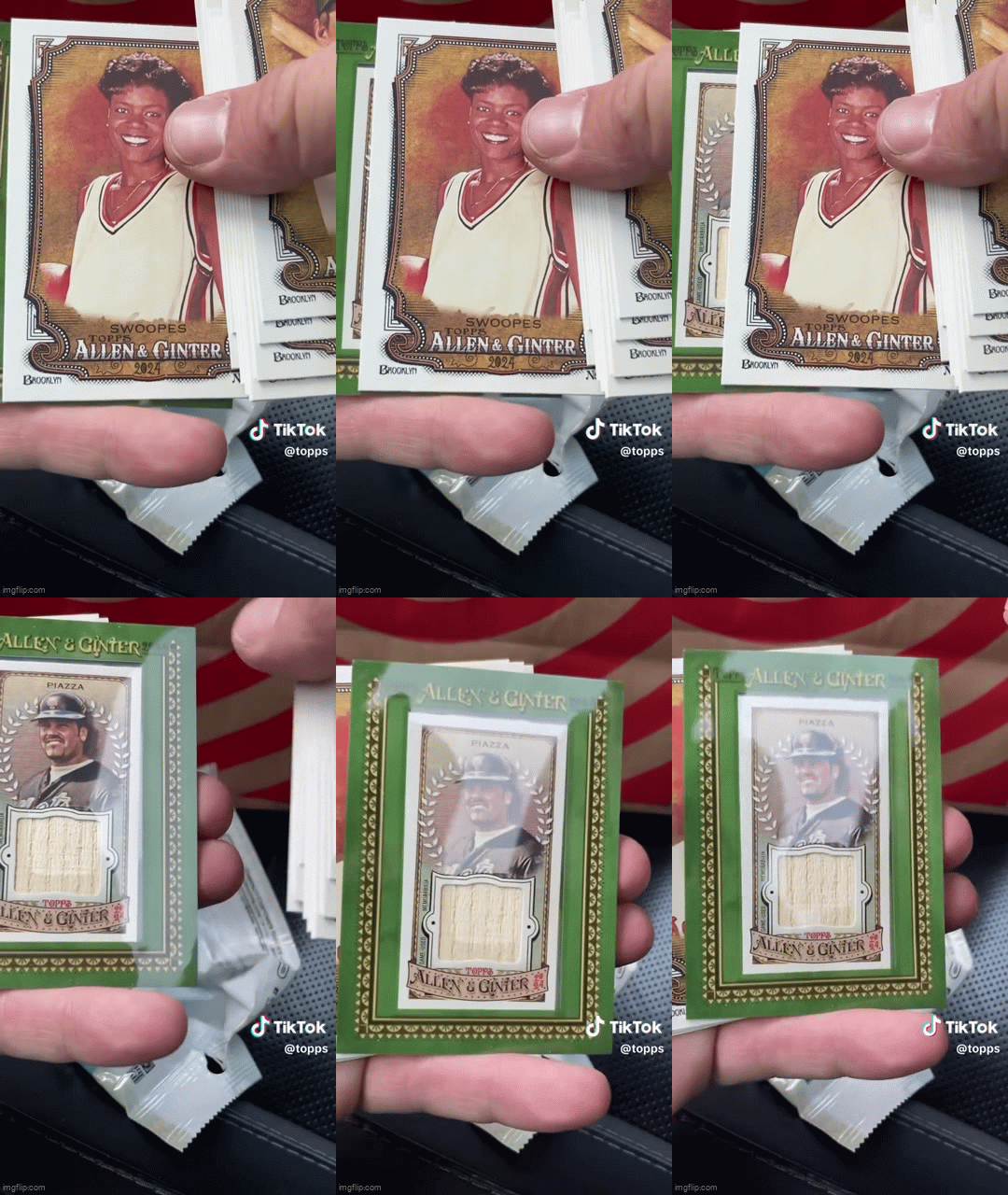
You’ve probably seen it online. Someone’s parked outside their local shop, cracks a pack on camera, and pulls an absolute hit. The comments light up. And our first thought, every single time: how is that card surviving the drive home?
Where does it even go? The pocket? The glove box? The cupholder next to a sweating iced coffee? Every answer makes us cringe.
We get it. The adrenaline is real. But a raw card rattling around a center console is a soft corner waiting to happen.
Because we rip a lot of wax around here, both for the blog and for ourselves, we’ve cycled through just about every protection product the hobby sells. Some of it’s essential. Some of it’s overkill. Here’s what actually lives in our rip kit at all times.
If you open wax as often as we do, you probably already have some version of this. If you’re just getting started, treat this as your shopping list.
One quick note before we dig in. This isn’t sponsored. Nobody’s paying us to show off plastic. We’re just walking through the gear we actually use. We’ll stick to the general product names so you can punch them into Amazon, Fanatics, or wherever you grab your supplies.
Let’s rip in.
The Blade (Optional)🔪
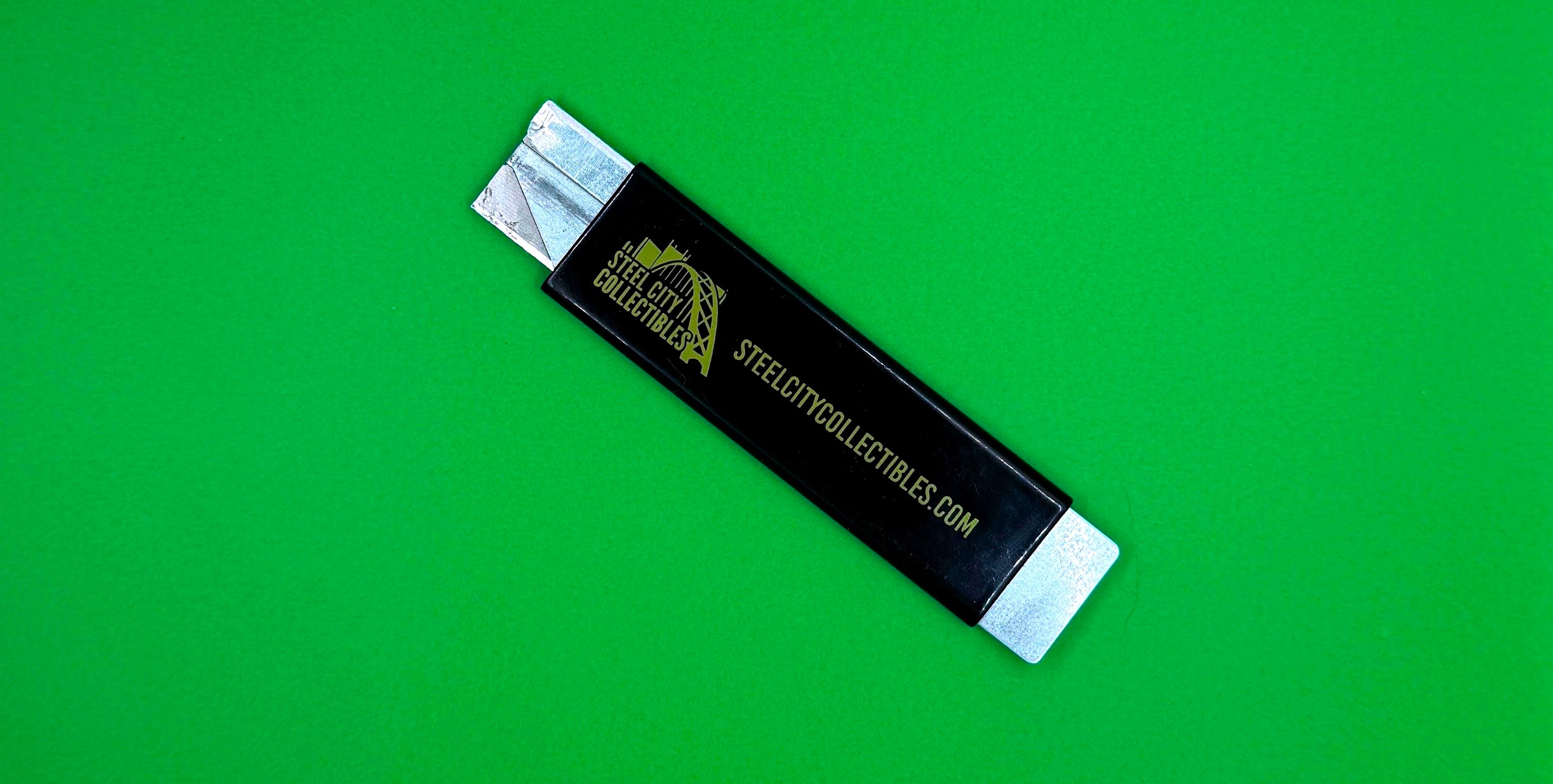
The seal on wax can be brutal to crack. Some boxes practically dare you to open them, and we got tired of fighting the cellophane every single time.
So we started keeping a small blade in the kit.
Ours was a freebie from The National a couple years back, but any small hobby knife or box cutter does the job. Slash a big “X” through the cellophane up top and the seal suddenly becomes incredibly easy to peel open. No more wrestling the box like it owes you money.
Totally optional. But once you start using one, you don’t go back.
The Penny Sleeve
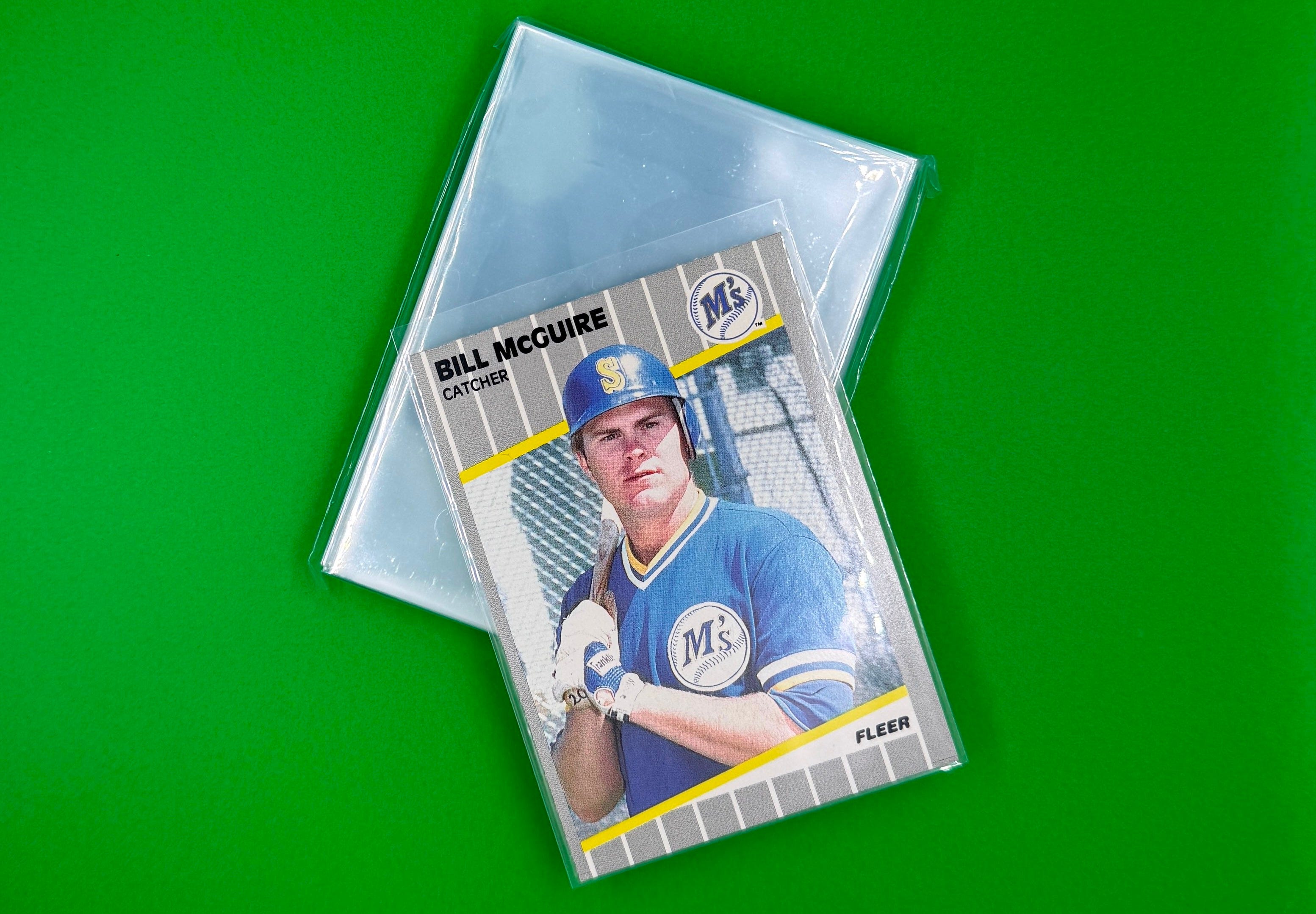
This is your first line of defense.
A penny sleeve is a thin sleeve of soft PVC that slips right over the card. It shields the surface from dust and from rubbing up against anything it shouldn’t. It’s flimsy on purpose. That’s a feature, not a flaw, because it barely takes up any room in your storage box.
There’s another reason we never rip without them. Certain cards (cough) 2003 Topps Baseball (cough) have a nasty habit of sticking together over time if they’re left raw. A penny sleeve eliminates that problem entirely.
Full confession: we sleeve every single card. Every base, every dupe, every common we’ll never look at again. You absolutely do not need to do that. That’s just our crazy preference.
Collectors should grab some of the thicker penny sleeves too. They’re made for chunkier cards, and you’ll want at least one pack on hand for the day you pull a relic.
You’ll also see some brands offering pre-cut corners, which make for a safer install and less chance of nicking your card’s corner on the way in. Nice to have if you’ve got it. We’re just not sure it’s worth the premium over standard sleeves.
The Top Loader
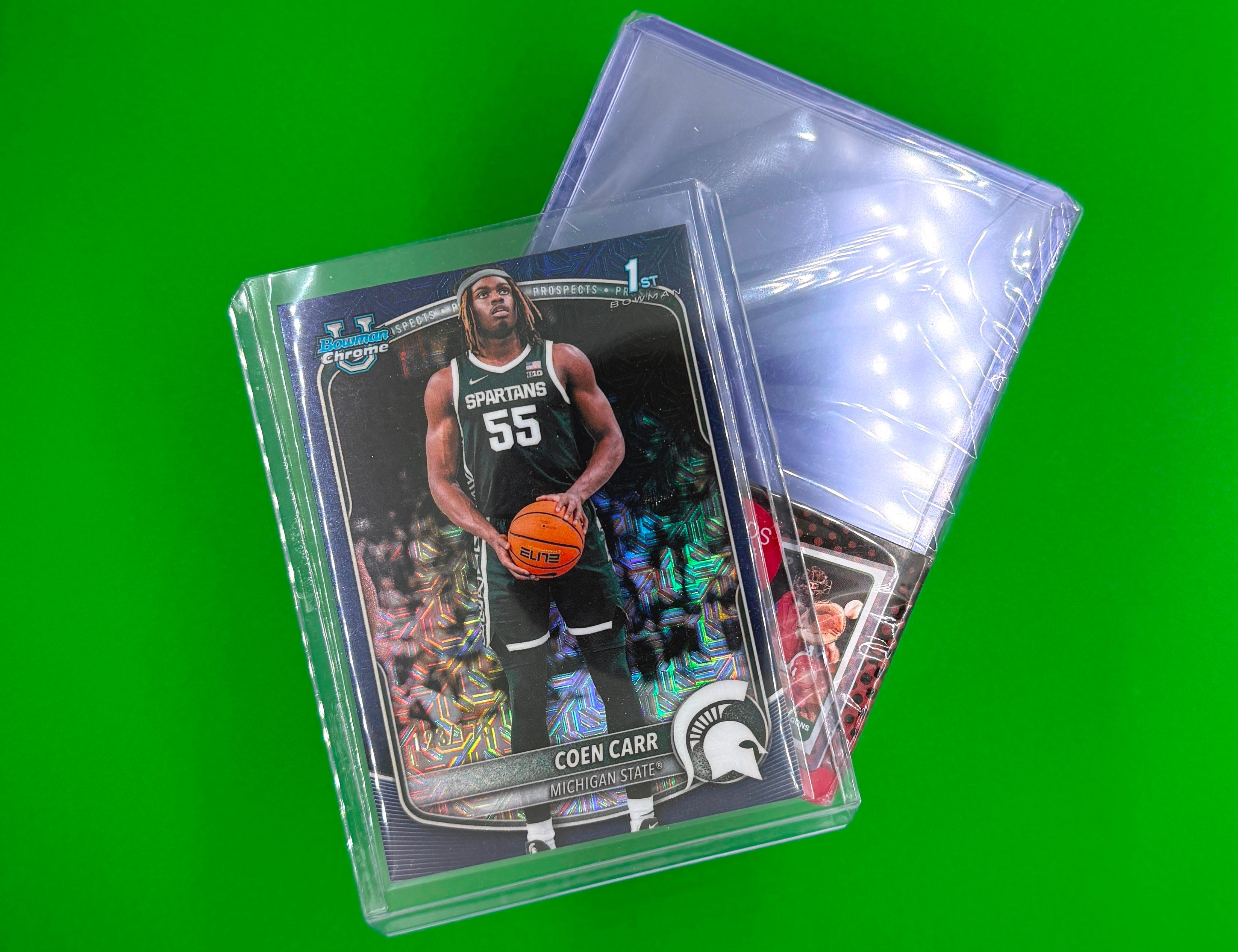
Want more protection? Slide that sleeved card into a top loader.
Top loaders come in two flavors. Semi-rigid loaders are the thinner ones, used mostly for grading submissions or for mailing cards in a plain white envelope. Standard rigid loaders are the better call for long-term storage. The thicker PVC keeps the card from bending or creasing.
Here’s the part new collectors can miss. The plastic inside a top loader can be a little rough, and sliding a raw card straight in can scuff the surface. So the move is always penny sleeve first, then top loader. Sleeve, slide, done.
Top loaders also come in a range of sizes to match different card thicknesses, and you never know what you’re going to pull. Our recommendation is to keep these four sizes covered:
20pt — standard paper stock
55pt — chrome cards
79pt — some numbered parallels and thinner relics
130pt — fat relics
That'll cover the overwhelming majority of what comes out of a box. The 20pt and 55pt are your every-rip workhorses, so stock two packs of each. For the thicker loaders, a single pack of each should do you just fine. Beyond that, thickness runs all the way up to 300pt, and there are even loaders shaped to fit autograph booklet cards. There's a top loader for just about every card you can pull.
The One Touch
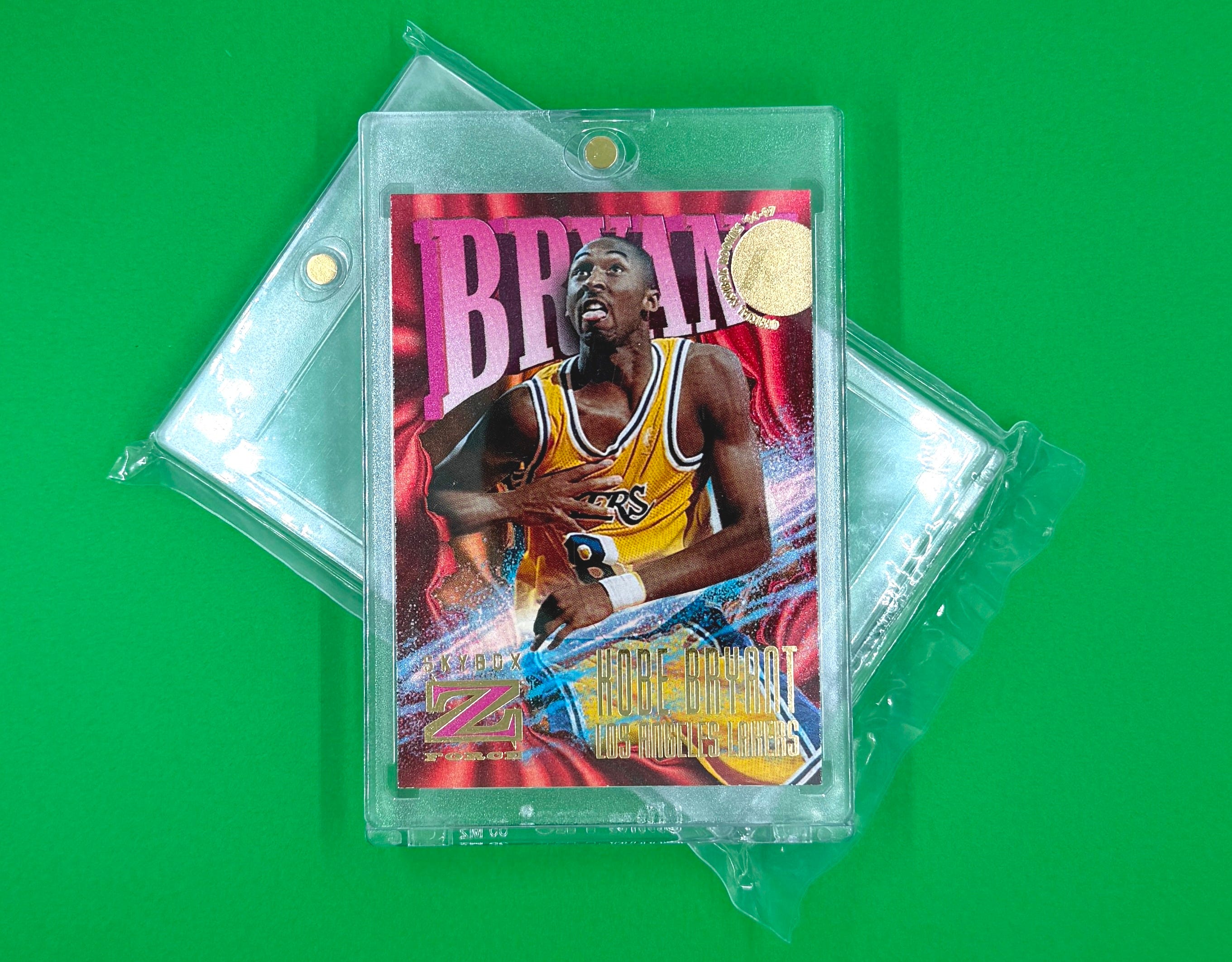
This one’s a little controversial if you spend any time on hobby Twitter.
A one touch is the ultimate form of protection short of grading. It’s a hard, thick plastic shell that encases the card on all sides, with the front face held in place by a magnet. Fun bit of history here: it used to be a screw that held the case shut, until manufacturers realized that screwing it down put too much pressure on the card itself.
Like top loaders, one touches come in multiple sizes for multiple card thicknesses. The major catch is the snug fit. The card has to go in raw. No penny sleeve, or the case won’t close all the way.
Here’s how we use them. When we rip a card that means something to us but we know it wouldn’t grade gem mint, it goes in a one touch. It makes for a much nicer display without the cost of slabbing.
We keep a few 20pt and 55pt one touches in the kit.
And yeah, you’ve probably seen the meme by now. Drop a card in a one touch and it somehow sells for more. Collectors have noticed it in singles auctions, with sellers tossing fifty-cent cards into a one touch and moving them for ten bucks and up.
We’re not calling it a proven fact. But there’s a real psychology at play. A card presented in a clean, magnetic case reads as more deliberate, more cared for, more valuable. The packaging signals that the seller thinks the card is worth protecting, and buyers respond to that signal whether they realize it or not.
That’s the power of presentation, hard at work.
A Couple More Things
This kit will cover just about any rip you do for standard releases.
If you’re shelling out the big bucks for products like Immaculate or Museum Collection, that’s a completely different ball game. Those cards are as thick as they come, and they need supplies sized to match. Worth knowing before you crack something that pricey.
One last tip before we go.
Since all of these products are built to fit your cards, they also fit neatly into a storage box. We keep our full rip kit in a 5,000 count monster box so everything’s in one place when it’s time to open something. A more basic setup fits just fine in a smaller box.
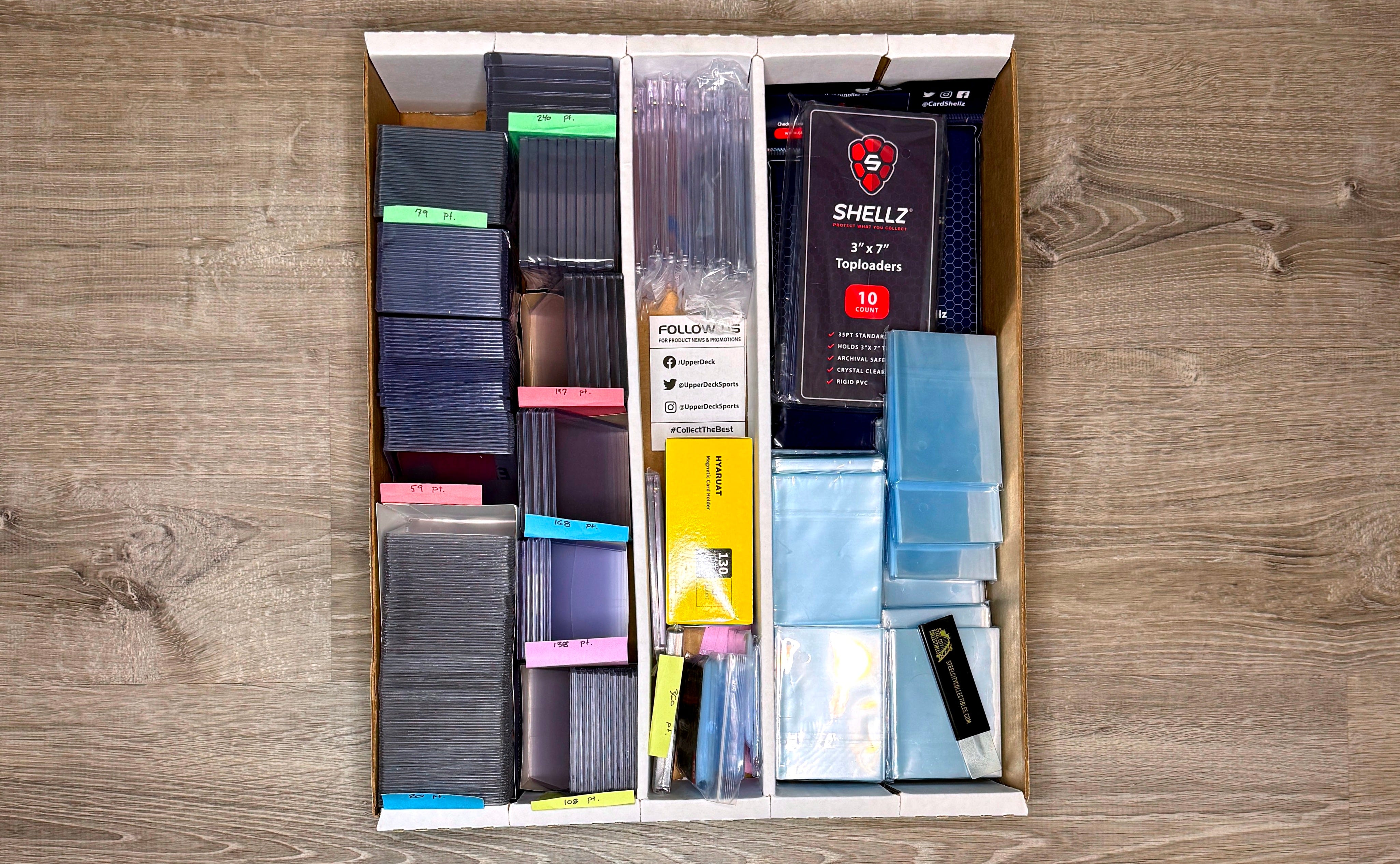
That’s our kit. Built it the slow way, one disappointing scratch at a time, so you don’t have to.
And if you’re going to rip in the car? Please. Keep a few of these in the glove box first. For our sake.
What’s in yours? Drop your rip kit essentials in the comments. If there’s a piece of gear we’re sleeping on, we want to hear about it.
Disclaimer: The content in The Hobby Wire is for informational and entertainment purposes only. Commentary, analysis, and opinions on sports cards, rookies, and the hobby are not financial, investment, or professional advice. Collectors should always do their own research before buying, selling, or trading cards. Market values are volatile and can change rapidly—past performance is not a guarantee of future results.
Unless specified, all pricing references are based on the Prizm/Refractor parallels of an athlete’s Chrome rookie card, with prices from market movers, alt.xyz & 130pt.com.
Any odds mentioned were derived from DraftKings Sportsbook.